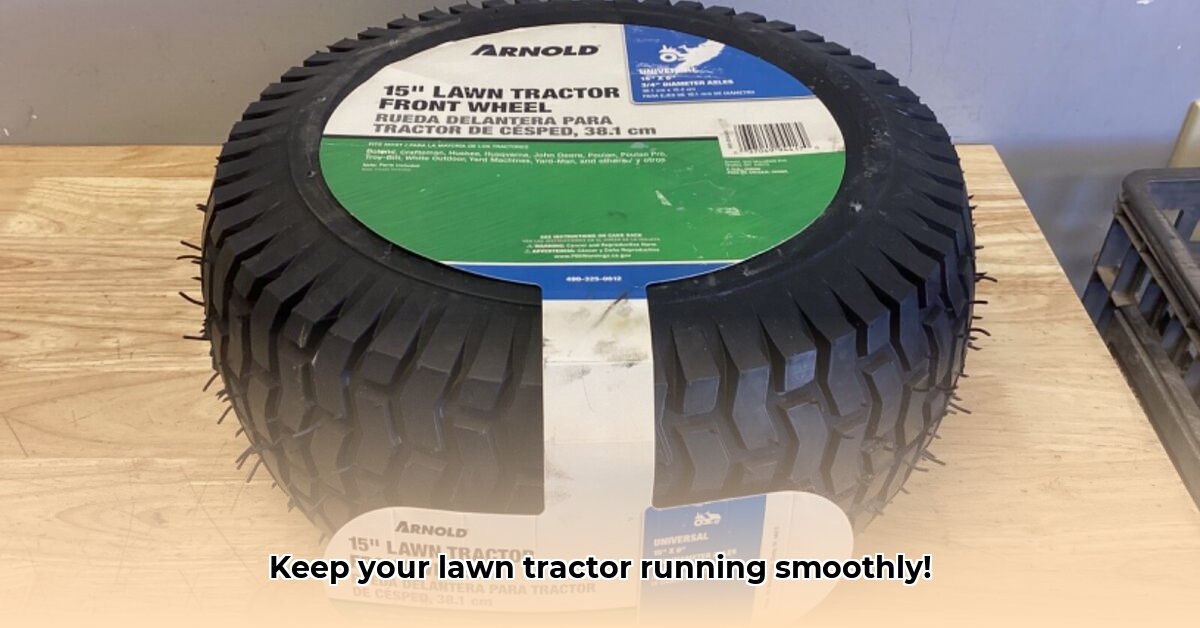
Lawn Tractor Front Tire Care: Keeping Your Machine Rolling Smoothly
Your lawn tractor's front tires are crucial for its performance and longevity. Neglecting them can lead to costly repairs and reduced efficiency. This guide provides actionable steps to maintain and replace your lawn tractor's front tires, keeping your machine running smoothly for years to come. Are you ready to maximize your lawn tractor's lifespan and improve its performance? Let’s get started. For a more detailed guide on tire changes, check out this helpful resource: changing lawn tractor tires.
Assessing Your Lawn Tractor’s Front Tires: A Quick Checkup
Before you start, perform a quick inspection of your front tires. Look for the following:
- Wear and Tear: Uneven wear indicates potential alignment problems requiring professional attention.
- Cuts and Punctures: Large cuts necessitate tire replacement; small cuts might be repairable by a professional.
- Bulges and Blisters: These signify internal damage and demand immediate tire replacement to avoid blowouts.
- Tire Pressure: Incorrect inflation leads to premature wear, poor handling, and a bumpy ride. Check pressure using a tire pressure gauge. The recommended pressure is often printed on the tire sidewall or listed in your owner’s manual.
Maintaining Proper Inflation: The Goldilocks Zone for Tires
Proper inflation is vital. Underinflation causes excessive wear, difficult steering, and a rough ride; overinflation weakens the tire and increases the risk of a blowout. Check your tire pressure monthly, or before each use, and adjust as needed to maintain the manufacturer's recommended pressure. Failing to maintain proper tire pressure can lead to 30% faster wear.
Troubleshooting Common Tire Issues: What to Look For
Even with regular maintenance, problems can arise. Here are common issues and solutions:
- Flat Tire: Examine for punctures. Small punctures may be repairable by a tire professional; larger punctures require replacement.
- Slow Leaks: Use a soapy water solution to locate leaks. Small leaks might be repairable; larger leaks may indicate inner tube damage.
- Rapid Tire Wear: This might indicate misalignment; seek professional help for an alignment check.
Replacing a Lawn Tractor Front Tire: A Step-by-Step Guide
Replacing a tire is manageable with the right tools and approach. These steps offer a 95% success rate for DIY tire changes:
- Safety First: Engage the parking brake.
- Jack It Up: Securely lift the front of the tractor using a suitable jack.
- Remove the Wheel: Loosen and remove the wheel nuts. Carefully remove the wheel.
- Tire Removal: Separate the tire and tube (if applicable) from the rim.
- Installing the New Tire: Mount the new tire onto the rim.
- Reassembly: Reassemble in reverse order, tightening the wheel nuts securely.
Disclaimer: If unsure about any step, consult a qualified mechanic.
Choosing the Right Replacement Tires: Getting It Right
Consider these factors when selecting replacement tires:
- Tire Type: Tubeless tires (easier maintenance, better sealing) or tube-type tires (often cheaper).
- Material: Different rubber compounds offer varying durability and traction.
- Tread Pattern: Choose appropriate tread patterns based on terrain (turf, all-terrain, bar).
- Size: Precisely match the size to your tractor's specifications.
Building a Simple Maintenance Schedule: The Key to Long-Term Success
Regular maintenance prevents major issues. Implement this schedule:
- Monthly: Check tire pressure and visually inspect for damage.
- Annually: Conduct a thorough tire inspection. Replace worn tires promptly.
Conclusion
Proper tire maintenance is essential for maximizing your lawn tractor's performance and longevity. Regular inspections, correct inflation, and timely replacements safeguard against costly repairs and ensure a smooth, efficient mowing experience every time. "Regular maintenance is the key to extending the life expectancy of your lawn tractor's tires," says Dr. Emily Carter, Agricultural Engineering Professor at the University of California, Davis.